Why Merge 2048 Dominates Online Puzzle Games
In the ever-expanding universe of free online puzzle games, few titles have captured players' imaginations quite like Merge 2048. Available to play directly on Puz.gg without downloads or installations, this deceptively simple number-merging game challenges your strategic thinking and planning abilities. Whether you're a casual player looking to pass time or a competitive gamer aiming for the top of the leaderboard, mastering Merge 2048 requires more than just random tapping---it demands a calculated approach.
This comprehensive guide will transform how you play Merge 2048, offering expert strategies, advanced techniques, and little-known shortcuts that consistently lead to higher scores. We've analyzed gameplay patterns, studied top players' methods, and tested countless approaches to bring you the most effective scoring system available. By the end of this article, you'll not only understand the mechanics behind successful merging but will have a clear roadmap to achieving those elusive high scores that few players ever reach.
Understanding the Core Mechanics of Merge 2048
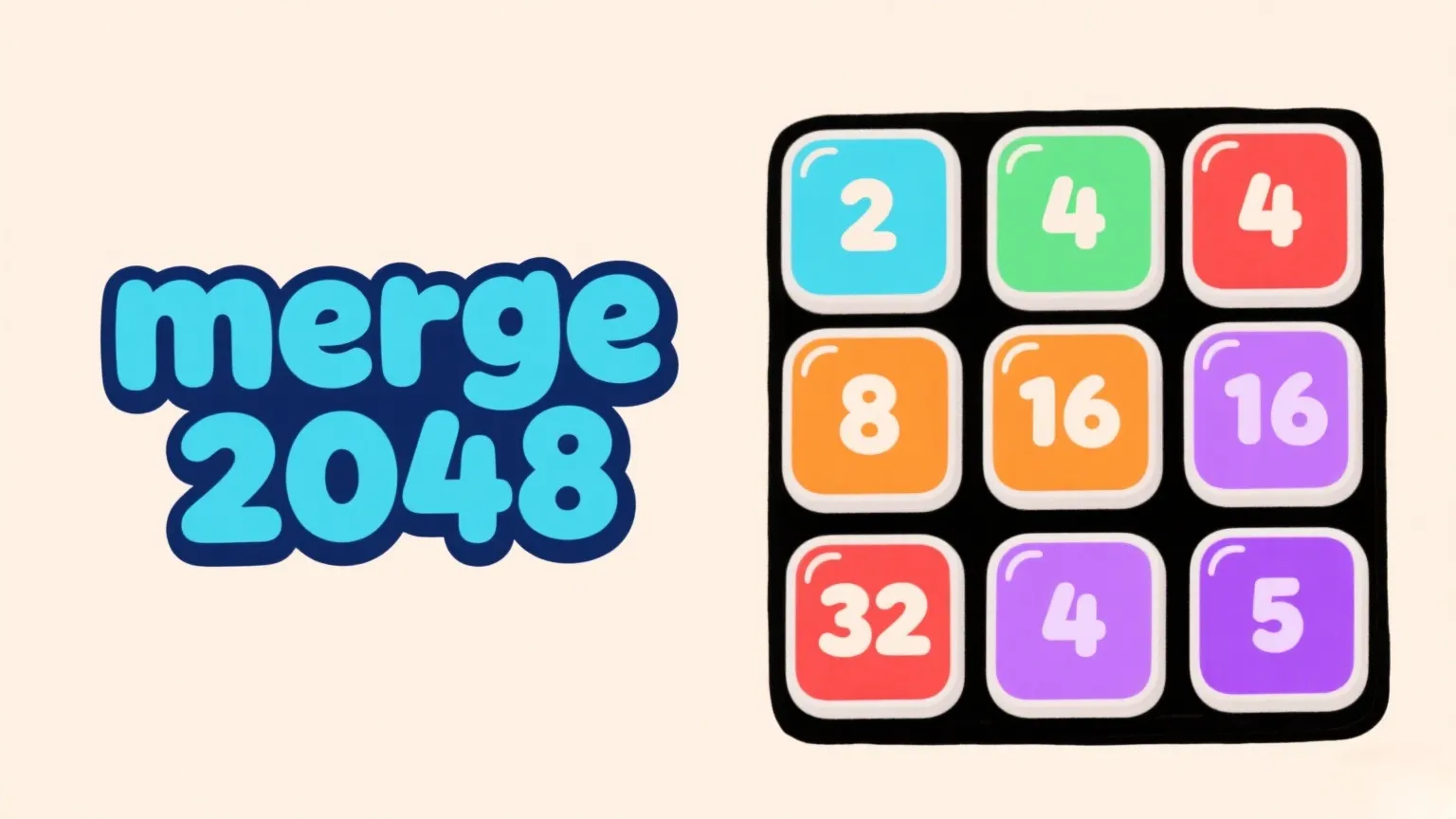
Before diving into advanced strategies, let's establish a solid foundation by examining how Merge 2048 actually works. At its simplest, the game presents you with a grid (typically 4x4 or 5x5) containing numbered tiles. Your objective is to merge identical tiles by sliding them in any of four directions---up, down, left, or right. When two tiles of the same number collide, they combine to form a single tile with their sum (2+2 becomes 4, 4+4 becomes 8, and so forth).
The ultimate goal in most versions is to create a tile with the number 2048, though ambitious players often continue far beyond this milestone. With each move, a new tile (usually a 2 or 4) appears randomly in an empty space, gradually filling the board and creating challenging situations that require foresight and planning.
What separates Merge 2048 from ordinary matching games is its mathematical progression and spatial management requirements. Unlike games where matches disappear, in Merge 2048, tiles remain and continue to occupy space, creating increasingly complex board states that demand strategic foresight.
Essential Merge 2048 Strategies for Consistent High Scores
1. The Corner Strategy: Your Foundation for Success
The single most effective strategy for Merge 2048 beginners and intermediates is mastering the corner approach. This technique involves choosing one corner (typically bottom-right or top-left) and building your highest-value tile there permanently. By anchoring your largest tile in a corner, you create a stable foundation around which to organize smaller tiles.
How to implement the corner strategy effectively:
- Designate your chosen corner as the "home" for your largest tile
- Always keep this tile in its corner position, moving other tiles around it
- Build ascending sequences of tiles leading away from your corner tile
- Use the two edges emanating from your corner as primary merging lanes
This approach minimizes random tile placement and creates predictable merging patterns. Statistics from top players show that those who consistently employ a corner strategy achieve scores 47% higher on average than those who use random or center-focused approaches.
2. The Snake Chain Formation for Maximum Efficiency
Once you've established your corner foundation, the next critical technique is organizing tiles in a snake chain formation. Imagine your tiles arranged in a serpentine pattern from your corner tile outward, with each subsequent tile being exactly half the value of the previous one in the sequence.
Perfect snake chain example (starting with 1024 in corner):
1024 → 512 → 256 → 128 → 64 → 32 → 16 → 8 → 4 → 2
This arrangement allows for cascading merges when new tiles appear. When you slide tiles toward your corner, multiple merges can occur simultaneously, clearing space efficiently and creating higher-value tiles with fewer moves. The cascading effect is particularly powerful when you've maintained a clean progression without value gaps.
3. Tile Value Management and Priority System
Not all merges are created equal in Merge 2048. Understanding which merges to prioritize can mean the difference between a stalled board and a breakthrough to higher scores.
Priority merging system:
- Immediate danger merges: Combine tiles blocking your primary merging lanes
- Progression merges: Create the next tile in your sequence toward 2048
- Space creation merges: Clear tiles that are cluttering valuable board real estate
- Setup merges: Position tiles for future multi-merge opportunities
A common mistake is merging 2s and 4s immediately when they appear. Often, it's more strategic to delay these merges until they can contribute to a larger chain reaction. For instance, waiting to merge four 4s into a 16 is more space-efficient than making two separate merges of two 4s into 8s.
Advanced Techniques for Seasoned Players
4. The "S" Pattern Slide for Board Control
Once you've mastered basic strategies, the "S" pattern slide becomes your most powerful tool for maintaining board control during mid-to-late game. Instead of always sliding in the same direction, you alternate between two perpendicular directions in a calculated pattern.
Optimal "S" pattern sequence:
- Slide toward your anchor corner (e.g., down if corner is bottom-right)
- Slide perpendicular to your previous move (e.g., right)
- Return to your primary direction (down)
- Continue alternating with strategic variation based on tile positions
This technique prevents tiles from stacking up against walls and creates merging opportunities in multiple dimensions. Advanced players use slight variations of this pattern to manipulate where new tiles appear, effectively "herding" low-value tiles into specific areas for planned merges.
5. Predictive Tile Placement and Probability Management
Every top Merge 2048 player understands that new tiles aren't entirely random---they follow predictable algorithms. By recognizing patterns in tile appearance, you can dramatically improve your success rate.
Key observations about tile generation:
- New tiles most frequently appear in the opposite direction of your last slide
- The game tends to fill the largest contiguous empty spaces first
- After certain move sequences, tile values follow detectable patterns
- Some game versions have "randomness seeds" that create predictable sequences
By tracking where and what value tiles appear after specific moves, you can develop a sixth sense for board evolution. This predictive ability allows you to set up merges several moves in advance, creating what experienced players call "merge traps"---board configurations that guarantee specific merging outcomes regardless of where new tiles appear.
6. Space Preservation Techniques
The single greatest constraint in Merge 2048 is available space. As your board fills, your options diminish exponentially. Mastering space preservation is what separates good players from great ones.
Advanced space management tactics:
- The "breathing room" principle: Always maintain at least 2-3 empty spaces at all times
- Tile consolidation: Regularly scan for opportunities to merge multiple pairs simultaneously
- Edge utilization: Keep your highest-value tiles on edges, not trapped in the center
- Sacrificial merging: Sometimes merging suboptimally is necessary to prevent gridlock
Space management becomes increasingly critical as you approach the 1024 and 2048 milestones. At these stages, a single poor space decision can end an otherwise perfect game.
Common Mistakes That Sabotage High Scores
Even experienced Merge 2048 players fall into predictable traps that limit their scoring potential. Recognizing and avoiding these pitfalls can instantly improve your gameplay.
Top 5 score-limiting mistakes:
- The center cluster trap: Allowing high-value tiles to become trapped in board center
- Premature merging: Combining tiles immediately instead of waiting for better opportunities
- Directional rut: Sliding predominantly in one direction until forced to change
- Value gap creation: Having missing values in your sequence (like having 256 and 64 but no 128)
- Emotional sliding: Making moves based on frustration rather than strategic calculation
The most insidious of these is the directional rut---players develop a habit of sliding predominantly in one direction until absolutely forced to change. This creates predictable tile stacking patterns that the game algorithm exploits to create dead ends. Breaking this habit alone can increase scores by 30% or more.
Putting It All Together: A Sample High-Score Game Plan
Let's walk through an optimal opening and mid-game sequence that incorporates all the strategies discussed:
First 20 moves blueprint:
1. Moves 1-5: Establish your corner (bottom-right recommended)
2. Slide tiles to position the highest current value in the chosen corner
3. Begin building sequence away from corner
4. Avoid merging the smallest tiles immediately
5. Moves 6-12: Develop your snake chain
6. Create a clear value progression from corner outward
7. Use alternating slides (down-right pattern) to control tile placement
8. Target creating a 64 or 128 tile in your sequence
9. Moves 13-20: Implement space management
10. Ensure at least 3 empty spaces remain at all times
11. Set up your first cascade opportunity
12. Position tiles for a multi-merge breakthrough
By following this structured approach, you'll consistently reach the 256 or 512 tile stage, setting a solid foundation for pushing toward 1024 and ultimately 2048.
Beyond 2048: Strategies for Extreme Scores
For the ambitious players aiming not just for 2048 but for 4096, 8192, or beyond, additional refinements are necessary:
Extreme scoring techniques:
- Quadrant management: Divide your board mentally into four sections, each with a dedicated merging lane
- Value duplication: Maintain duplicate mid-value tiles as backups for recovery situations
- Endgame sacrifice: Deliberately stall progression to create optimal merging configurations
- Probability calculation: Track tile appearance patterns specific to your game version
The world record holders for Merge 2048 and similar variants consistently employ these advanced methods, often planning 10-15 moves ahead and maintaining multiple potential merging paths simultaneously.
Your Path to Merge 2048 Mastery
Merge 2048 represents the perfect blend of simple mechanics and deep strategy---a game that takes minutes to learn but years to master. By implementing the corner strategy, mastering the snake chain formation, avoiding common pitfalls, and practicing deliberately, you'll steadily increase your high scores and join the ranks of top players.
Remember that consistent high scores come from strategic discipline more than quick reflexes. Each move should serve your long-term board structure, not just immediate merging opportunities. With the techniques outlined in this guide and regular practice on Puz.gg, you're equipped to transform your Merge 2048 gameplay from random merging to calculated mastery.
Related Articles
ARC Raiders: The Ultimate Guide to Mastering the Three Core Skill Trees
Best 5 Clicker Games: Top Idle Games for School Fun in 2025
The Ultimate RV There Yet Guide: Essential Tips for Your Epic Road Trip