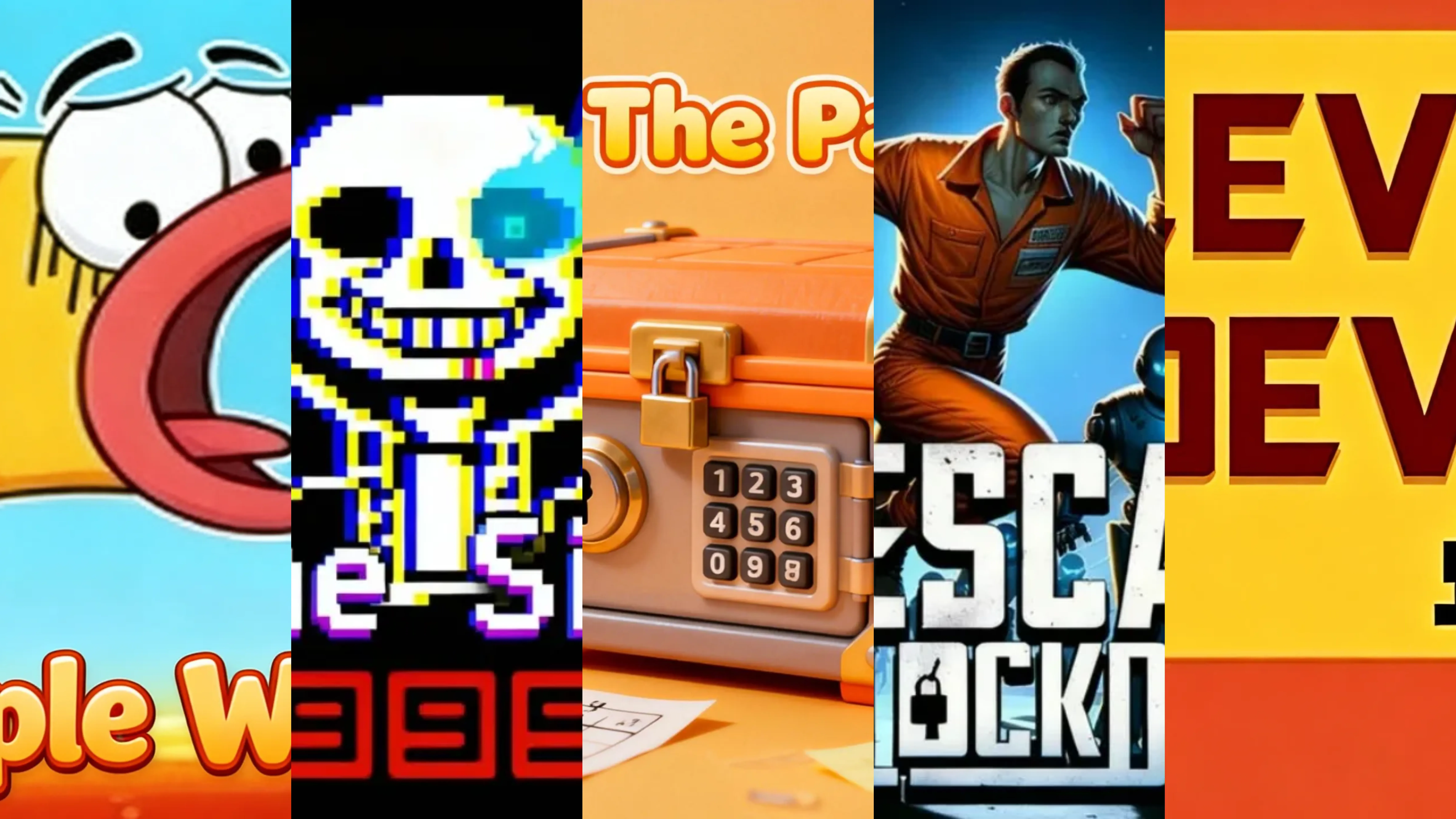
Why These Games Represent the Pinnacle of Logical Challenge?
The distinction of these Hardest Puzzle Games lies in their deliberate rejection of accessibility conventions. Where casual puzzles offer gentle learning curves and forgiving mechanics, these games present uncompromising systems that punish even minor miscalculations. Their difficulty emerges not from artificial barriers but from deeply embedded logical complexities that require systematic thinking, multiple-solution evaluation, and adaptive strategy development. These aren't games you simply play---they're problems you must methodically solve through sustained intellectual effort.
Architectures of Genuine Cognitive Demand
Unlike puzzles that rely on reflexes or memory alone, these Logic Games construct elaborate systems of interlocking rules that must be understood before they can be mastered. Each game presents a self-contained logical universe with its own physics, constraints, and win conditions that often defy conventional gaming expectations. The challenge stems from needing to comprehend these unique systems while simultaneously applying deductive reasoning, spatial intelligence, and sometimes even psychological insight. This multi-layered cognitive demand ensures that only players willing to engage in deep analytical thinking will achieve consistent success.
Progressive Complexity Without Compromise
These games implement difficulty not through superficial means but through organic complexity escalation. Early stages serve as deceptive tutorials that introduce fundamental mechanics, while later levels systematically remove safety nets, introduce contradictory information, and combine previously separate systems into overwhelming combinations. This structural approach means players aren't merely reacting to increasing challenge---they're required to continuously expand their understanding and develop new cognitive frameworks. The result is a genuine progression of intellectual capability that mirrors advanced problem-solving in mathematics, programming, or engineering disciplines.
The Psychology of Persistent Failure and Eventual Mastery
What sets these Hard Puzzle Games apart is their relationship with player failure. Each unsuccessful attempt provides crucial information about the game's hidden logic, forcing players to analyze mistakes, formulate new hypotheses, and test alternative approaches. This iterative process of failure-analysis-attempt creates a powerful learning cycle that ultimately leads to profound "eureka" moments. The emotional and intellectual payoff from finally solving a previously insurmountable puzzle after dozens of failures creates a sense of accomplishment unmatched in simpler games, reinforcing advanced problem-solving methodologies that extend beyond gaming.
The 5 Hardest Puzzle Games That Will Test Your Logic
🐛 Apple Worm: The Predictive Spatial Algorithm
Tags: Hardest Puzzle Games, Logic Games, Spatial Reasoning, Pathfinding, Strategy, Hard
Rating: Difficulty: 5/5

Apple Worm presents a deceptively simple premise that evolves into one of the most mathematically demanding Hard Puzzle Games available. The objective appears straightforward: guide a growing worm to consume all apples on a grid-based board. The devastating complexity emerges from the worm's immutable behavior---it moves continuously along its set path, grows with every apple consumed, and cannot cross its own ever-lengthening body. This creates a combinatorial explosion of possible path permutations where a single misstep in the early game inevitably leads to complete failure dozens of moves later. The game essentially functions as a dynamic, real-time traveling salesman problem with fatal spatial constraints.
What elevates Apple Worm to legendary status among Logic Games is its requirement for complete predictive visualization. Successful play demands calculating not just the immediate next move, but the entire sequence of movements required to clear the board while avoiding future self-collisions. Players must mentally simulate multiple turn sequences, track the worm's future position in various configurations, and identify "escape routes" that will remain available after the worm has expanded. The game systematically eliminates improvisation---victory requires pre-planned path algorithms that account for every square's occupation status at every future moment. This represents one of the purest implementations of computational thinking in gaming form, where players essentially become human pathfinding algorithms.
The game's difficulty curve implements a brutal but fair pedagogy. Early levels with sparse apples teach fundamental path patterns and the critical concept of leaving "return corridors." Middle levels introduce obstacle configurations that force specific traversal orders. Late-game boards become dense topological puzzles where the solution path represents perhaps one viable sequence among millions of possibilities. Each failed attempt provides crucial information about spatial constraints, gradually training players to internalize advanced pathfinding heuristics. For those seeking Hardest Puzzle Games that genuinely improve systematic thinking and multi-step planning, Apple Worm stands as an unparalleled intellectual obstacle course.
Advanced Pathfinding Methodologies
Reverse-Engineering from Final Position: Instead of planning from the worm's starting location, work backward from the final apple. Determine which squares must be occupied last, then identify the necessary penultimate positions, creating a complete reverse path that guarantees a viable forward solution.
Corridor Preservation Calculus: Before consuming any apple, identify which grid pathways will become permanently blocked by the worm's expanded body. Ensure at least one continuous corridor remains connecting all unconsumed apples to the worm's future position---a fundamental constraint violated in 90% of failed attempts.
Turn-Segmentation Strategy: Divide the board into distinct zones separated by mandatory turn points. Plan consumption sequences within each zone as independent sub-problems before integrating them into a global solution, applying divide-and-conquer algorithmic thinking to manageable segments.
😈 Level Devil: The Pattern Deception Masterclass
Tags: Hardest Puzzle Games, Logic Games, Pattern Recognition, Deception, Psychology, Hard
Rating: Difficulty: 4.8/5

Level Devil operates on a fundamentally different principle than traditional Hard Puzzle Games: it systematically weaponizes player expectations against them. While appearing as a conventional platformer with simple movement mechanics, its true challenge emerges from meticulously designed patterns of deception that exploit cognitive biases about game design conventions. Each level presents what seems like a straightforward obstacle course, but contains hidden traps, illusory pathways, and physics violations that punish conventional gaming intuition. The game doesn't just test your reflexes---it tests your capacity for skepticism, observation, and adaptive learning in an environment designed to mislead.
The game's psychological sophistication places it among the most demanding Logic Games available. Early levels establish apparent "rules" about platform behavior, enemy movement patterns, and object physics. Subsequent levels then violate these rules in subtle but devastating ways, forcing complete paradigm shifts in player approach. This creates a metacognitive challenge where players must continuously question their fundamental assumptions about the game's reality. Success requires treating each new level as an independent logical system to be decoded through cautious experimentation rather than applying learned patterns from previous experience. This constant requirement for cognitive reset represents a rare form of intellectual challenge that breaks conventional puzzle-solving methodologies.
Level Devil implements difficulty through layered deception. Visual deception includes false platforms, camouflaged traps, and perspective tricks. Behavioral deception involves enemies with randomized rather than patterned movements, objects with inconsistent physics, and triggers with delayed effects. Logical deception presents seemingly impossible scenarios that require "breaking" the level through unintended mechanics. This multi-dimensional approach to challenge ensures that no single cognitive strategy guarantees success---players must develop flexible thinking, extreme patience, and systematic testing protocols. For those who believe they can anticipate game design, Level Devil serves as a humbling testament to the creativity of deceptive mechanics in Hard Puzzle Games.
Advanced Deception Analysis Protocols
The Three-Pass Observation Rule: Before any movement, complete three analytical passes: first for obvious obstacles, second for texture/color inconsistencies that might indicate hidden elements, third for environmental patterns that seem "too perfect" (often indicating traps).
Controlled Variable Testing: When encountering new mechanics, design experiments that test one variable at a time (e.g., "Does this platform always collapse after three bounces, or after supporting weight for two seconds?"). Document results externally, as the game provides no internal tracking.
Expectation Inversion Principle: When a solution seems immediately obvious, assume it's incorrect. Actively search for why the obvious approach would fail---this predictive analysis often reveals the hidden deception before it triggers failure.
🔐 Escape Lockdown: The Systemic Deduction Environment
Tags: Hardest Puzzle Games, Logic Games, Escape Room, Deduction, Environmental, Hard
Rating: Difficulty: 4.7/5
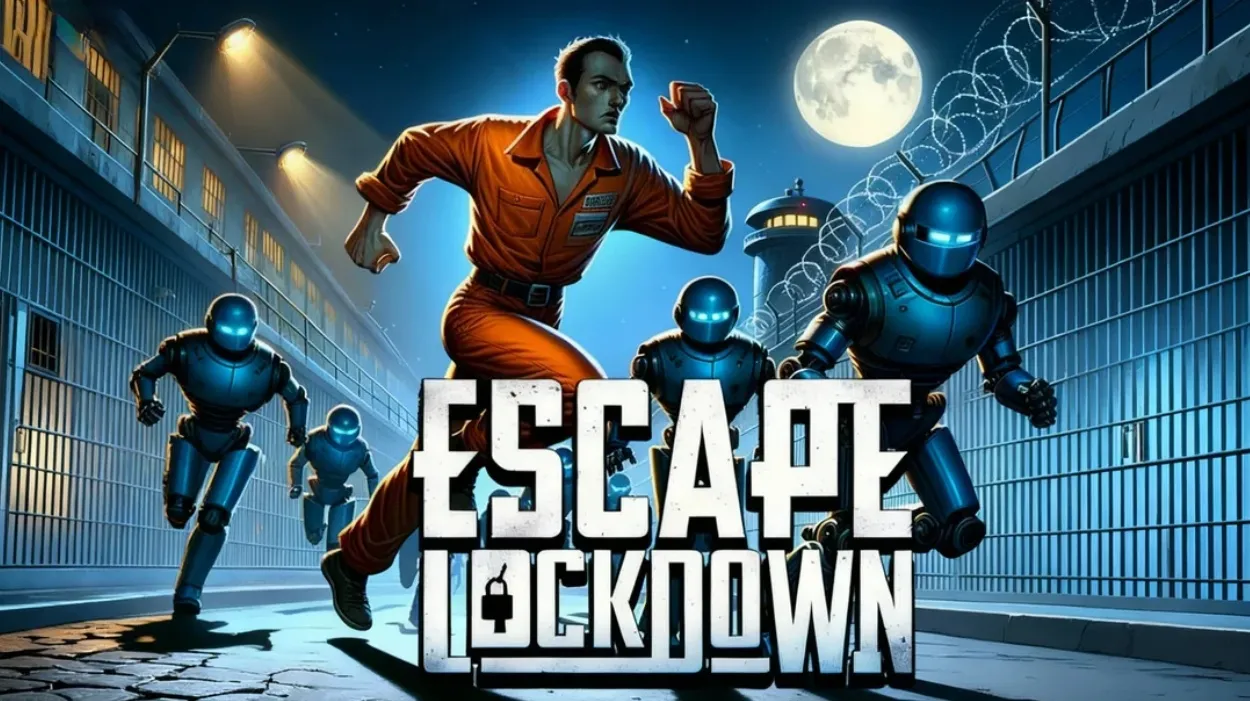
Escape Lockdown transcends typical escape room games by creating a fully integrated deductive ecosystem that stands among the most demanding Hard Puzzle Games in the genre. The game presents a detailed environment filled with interconnected puzzles, layered clues, and multi-step logical sequences that require holistic analysis rather than isolated problem-solving. Unlike simpler games where puzzles exist independently, Escape Lockdown implements a dense network of cause-and-effect relationships where solving one puzzle often provides components, information, or access necessary for several others. This creates a sprawling logical web that demands systematic documentation, hypothesis generation, and recursive solution verification.
The game's intellectual rigor places it firmly within the category of Logic Games designed for analytical minds. Clues are rarely straightforward---they're embedded in environmental details, require combination of disparate information sources, or only become interpretable after discovering key contextual information elsewhere. The game implements realistic constraints: inventory management matters, some items have multiple uses, and certain actions create irreversible changes to the environment. This forces players to think like actual investigators rather than game participants, considering resource allocation, sequence optimization, and opportunity cost with every decision. The complexity emerges not from individual puzzle difficulty but from the cognitive load of managing numerous simultaneous puzzle threads and their interdependencies.
Escape Lockdown implements a sophisticated knowledge-gating system where progress requires not just solving puzzles but achieving comprehensive environmental understanding. Early areas contain clues whose significance only becomes apparent hours later. Solutions often require cross-referencing information from visually and logically separate locations. The game even includes deliberate red herrings and misleading clues that must be identified through consistency checking with established facts. This creates an experience akin to solving a complex mystery novel where every detail potentially matters, training exceptionally thorough observational skills and logical integration abilities. For players seeking Hardest Puzzle Games that reward meticulousness and systematic thinking, Escape Lockdown represents a pinnacle achievement in environmental deduction design.
Advanced Deduction Systems
Dual Documentation Protocol: Maintain two separate documentation systems---one for factual observations (inventory items, codes found, door states) and one for unresolved questions and hypotheses. Regularly cross-reference to identify connections between unanswered questions and unused resources.
Environmental Change Tracking: After any significant action, systematically re-examine previously visited areas. Many puzzles trigger subtle environmental changes (sounds, lighting, object positions) that provide crucial secondary clues, a mechanic most players completely overlook.
The "Why This Detail?" Interrogation: For every distinct environmental element, consciously ask "Why did the developers include this specific detail?" Items with unusual visual prominence, unique interaction options, or distinctive placement often indicate puzzle relevance rather than mere decoration.
🎭 Guess The Password: The Psychological Linguistics Challenge
Tags: Hardest Puzzle Games, Logic Games, Linguistics, Psychology, Deduction, Hard
Rating: Difficulty: 4.6/5
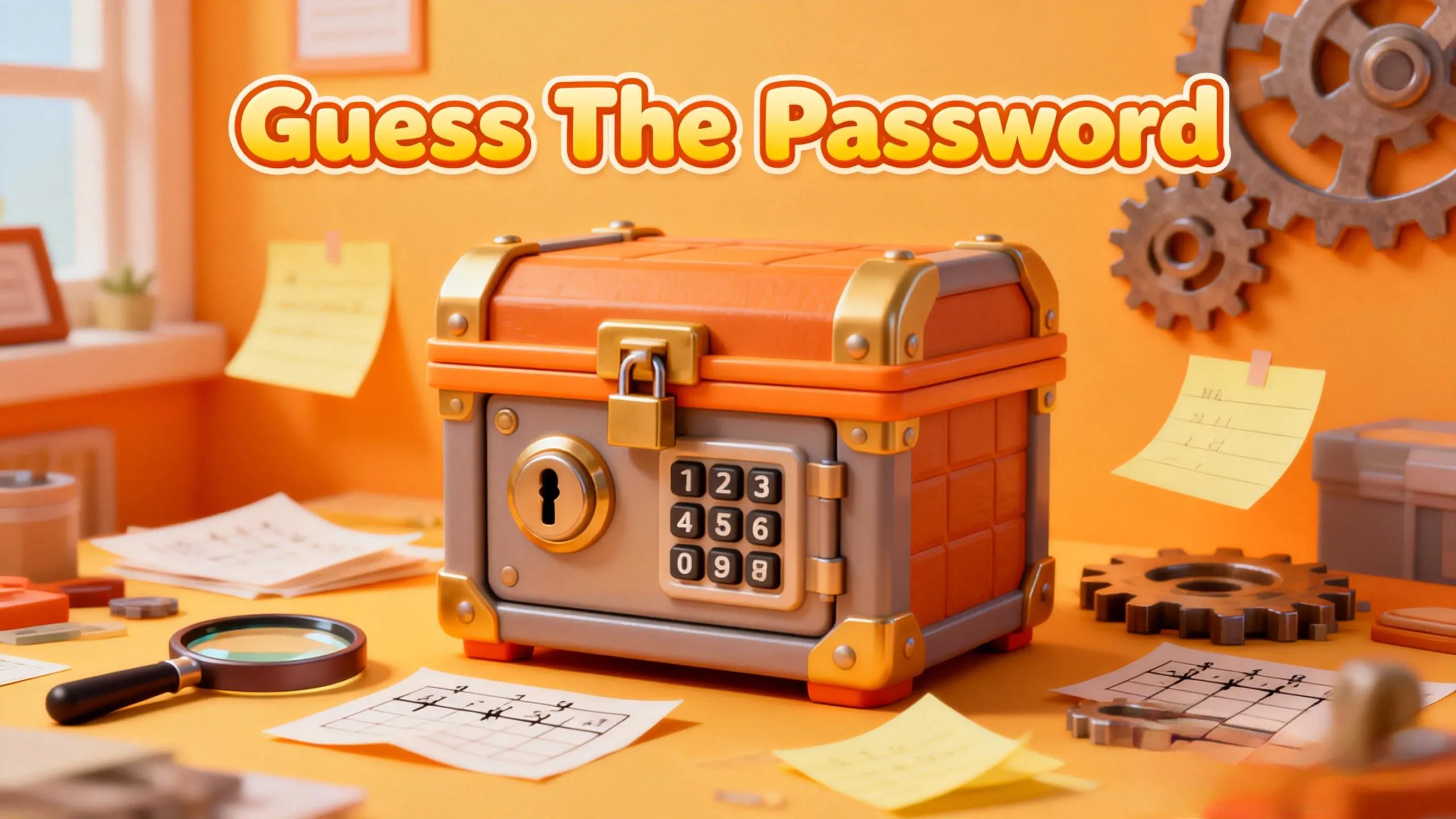
Guess The Password transforms the simple concept of password guessing into a profound exercise in psychological profiling, linguistic analysis, and logical elimination that stands among the most intellectually demanding Hard Puzzle Games. Each puzzle presents a fictional character with distinctive traits, backstory elements, and psychological motivations, alongside a password-protected system. Players must deduce the exact password by analyzing the character's personality, linguistic patterns, life circumstances, and the contextual clues embedded in the environment. Unlike conventional deduction games with clear logical pathways, this game requires deep empathetic reasoning combined with systematic hypothesis testing against ambiguous evidence.
The game's unique difficulty stems from its simulation of real-world psychological deduction---a domain without clean logical rules. Characters exhibit complex, sometimes contradictory traits; their potential passwords reflect personal associations rather than logical conventions; clues are subtle and interpretable in multiple ways. Players must construct psychological profiles, predict how specific individuals would create memorable passwords, and evaluate which possibilities best fit the accumulated evidence. This represents a category of Logic Games rarely seen in digital form, requiring skills more associated with investigative profiling or literary analysis than traditional puzzle-solving. The game essentially trains theory of mind---the ability to attribute mental states to others based on limited evidence.
Guess The Password implements sophisticated clue design that rewards multiple analytical perspectives. Linguistic clues include reading materials, handwritten notes, and verbal patterns that reveal education level, cultural references, and cognitive style. Environmental clues involve possessions, decor choices, and organizational habits that indicate personality traits and life priorities. Temporal clues reference specific dates, ages, and historical contexts that narrow possibilities. The game's true challenge emerges from integrating these disparate clue categories into a coherent psychological portrait that generates specific password predictions. For players seeking Hardest Puzzle Games that develop empathy, linguistic analysis, and abductive reasoning (inference to the best explanation), this title offers an unparalleled cerebral challenge that bridges logic and psychology.
Advanced Psychological Profiling Techniques
Trait Correlation Matrix: Create a spreadsheet mapping observed character traits against potential password categories (dates, names, hobbies, phrases). Assign probability weights based on trait strength and password relevance, then generate testable hypotheses from high-probability intersections.
Linguistic Register Analysis: Examine all available text for register characteristics (formal/colloquial, technical/emotional, concise/elaborate). Passwords typically match the character's dominant register---a formal character won't use slang passwords, while an emotional character avoids sterile technical terms.
Motivation Hierarchization: Identify the character's primary, secondary, and tertiary motivations (security, nostalgia, aspiration, identity expression). Passwords typically reflect primary or secondary motivations, not tertiary ones---this hierarchy dramatically narrows hypothesis space.
⏱️ Bad Time Simulator: The Precision Pattern Gauntlet
Tags: Hardest Puzzle Games, Logic Games, Pattern Recognition, Precision, Rhythm, Hard
Rating: Difficulty: 4.9/5

Bad Time Simulator represents the absolute pinnacle of pattern recognition and execution-based challenge within Hard Puzzle Games, implementing a system that demands near-perfect precision across extended sequences with zero tolerance for error. The game presents elaborate attack patterns that must be navigated through precise movement, timed actions, and pattern prediction. Unlike reaction-based games, Bad Time Simulator requires complete memorization and flawless execution of lengthy, complex sequences where a single mistimed input among hundreds guarantees failure. The game essentially functions as a cognitive and motor skill examination that tests working memory capacity, procedural learning, and stress-resistant precision.
The game's legendary difficulty status among Logic Games stems from its ruthless implementation of pattern complexity and execution purity. Early phases introduce basic pattern elements and establish the absolute precision required. Subsequent phases don't merely increase speed---they introduce pattern layers that operate simultaneously (horizontal and vertical attacks with independent rhythms), deceptive pattern variations that look identical until milliseconds before impact, and pattern breaks that punish rote memorization. The game systematically attacks every potential shortcut: patterns are too long to memorize through simple repetition, variations are too subtle to distinguish without analytical attention, and execution windows are too narrow to accommodate anything less than perfect timing. This creates a challenge that demands both deep cognitive processing and refined motor execution in perfect synchronization.
Bad Time Simulator implements a sophisticated learning reinforcement system where failure provides specific information but no reduced challenge. Each attempt against a pattern reveals subtle timing relationships, visual cues for upcoming variations, and personal execution tendencies that cause failure. The game essentially forces players to become their own coaches---analyzing replay patterns, identifying consistent failure points, and designing targeted practice strategies for specific pattern segments. This metacognitive requirement elevates it beyond mere reflex testing into the realm of systematic skill acquisition methodology. For players seeking Hardest Puzzle Games that genuinely measure and expand the limits of pattern recognition, procedural memory, and execution under cognitive load, Bad Time Simulator stands as perhaps the most rigorous examination available in gaming form.
Advanced Pattern Deconstruction Methodology
Phased Chunking Protocol: Don't attempt to memorize entire patterns. Divide them into logical segments (initial sequence, middle variations, finale) and master each segment independently before integrating. This cognitive technique mirrors expert memorization strategies for complex sequences.
Input Auditing: After each failure, verbally reconstruct your exact input sequence during the failure window. Identify whether the error was cognitive (misremembered pattern), perceptual (misread visual cue), or motor (imperfect execution)---each error type requires different corrective strategies.
Predictive Cue Cataloging: Create a physical or mental catalog of subtle visual/auditory cues that precede specific pattern elements. Many attacks have nearly-identical appearances until milliseconds before execution, but contain tiny distinguishing features that experts learn to recognize subconsciously.
Are You Ready for Genuine Intellectual Challenge?
The five games presented here---Apple Worm, Level Devil, Escape Lockdown, Guess The Password, and Bad Time Simulator---represent distinct frontiers within the domain of Hardest Puzzle Games. Each implements a unique approach to intellectual challenge: spatial algorithmics, psychological deception, environmental deduction, psychological profiling, and precision pattern mastery. What unites them is their uncompromising demand for systematic thinking, analytical rigor, and adaptive learning. These aren't games designed for entertainment during idle moments---they're demanding cognitive exercises that will genuinely expand your problem-solving capabilities.
The true value of engaging with such Logic Games extends beyond gaming proficiency. The methodologies developed through conquering these challenges---systematic testing, reverse-engineering, psychological profiling, pattern deconstruction, and failure analysis---represent transferable cognitive skills applicable to programming, scientific research, strategic planning, and complex system analysis. Each game essentially functions as a specialized trainer for specific high-order thinking skills that conventional education rarely addresses directly.
So which intellectual frontier will you confront first? The spatial computations of Apple Worm, the psychological warfare of Level Devil, the environmental deduction of Escape Lockdown, the linguistic profiling of Guess The Password, or the precision patterning of Bad Time Simulator? Visit Puz.gg to begin your confrontation with these formidable challenges. Prepare for frustration, prepare for repeated failure, but also prepare for the unparalleled intellectual satisfaction that arrives only after genuine cognitive conquest. Your logical abilities are about to be measured against some of the most demanding puzzles ever designed for the human mind.
Which game broke your assumptions about puzzle difficulty? What solution methodology finally unlocked a seemingly impossible challenge? Share your hard-won insights and strategic breakthroughs in the comments below, and contribute to the collective understanding of these extraordinary Hard Puzzle Games.
Related Articles
Merge 2048 Mastery: Tips to Score Big Every Time
Top 5 Casual Puzzle Games Perfect for Killing a Few Minutes (Free & No Download)
Tunnel Rush vs Slope Game: Which Unblocked Reflex Game Is Harder?